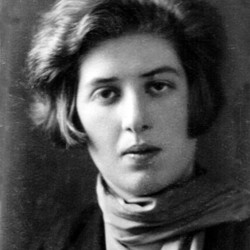
Victim of a Stalin Purge
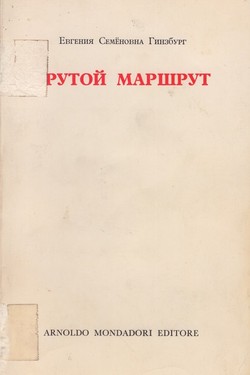

- Review
-
Source Type
- Krutoi marshrut
- The Deserted House
- Odin den' Ivana Denisovicha
-
Publications
- 27 April 1967
-
Date
- English
-
Language
Times Literary Supplement (April 27, 1981)
The Stalin purges, not only of the terrible years of 1937-39 but also of those of 1949-52, have been the subject of an ever-growing literature. Some, like General Gorbatov’s reminiscences and Alexander Solzhenitsyn’s One Day, in the Life of Ivan Denisovich, were published in the Soviet Union a few years ago; others, like Anna Akhmatova’s Requiem and Lydia Chukovskaya’s The Deserted House, were smuggled out and published outside Russia. In many other books published in the Soviet Union there are numerous references to the purges, but after the great sensation caused in 1962 by the Solzhenitsyn story, which Novy Mir published with Mr. Khrushchev’s approval, the whole subject is frowned upon by the party leaders, who apparently do not like Soviet readers to be reminded too often of the horrible and ugly things that happened during the fifty years of the Soviet regime.
Apart from Akhmatova’s poem, the two great “purge classics” are the Solzhenitsyn and the Chukovskaya books. The former shows the daily routine inside a concentration camp; the latter tells the story of a loyal and completely innocent family who were destroyed by the hideous purge machinery. When one comes to think of it, the Solzhenitsyn story is a relatively mild one; bad though the conditions in the camp are, the unfortunate people there do not lose their human semblance, and there is scarcely any suggestion that all, or most of them, will inevitably die or, at any rate, be reduced to physical and mental wrecks. Many of the prisoners[,] among them Ivan Denisovich himself[,] show a kind of stoic optimism: in Chukovskaya’s story (shortly to be published by Barrie and Rockliff) the whole horror of what Olga Petrovna’s son has suffered at the hands of the NKVD inquisitors and is enduring in the “distant camp” where, as he writes in a smuggled-out letter, “he will not last long,” is clearly implied, rather than explicitly stated.
Mme. Ginzburg’s book, Krutoi Marshrut (The Steep Itinerary) is of a different order. Unlike the other two books it is by no means a literary masterpiece, but it is a remarkable documentary on what a woman of thirty, the wife of a high official at Kazan, herself a loyal party member and the mother of two children, suffered during the first three of the eighteen years she spent in prisons and concentration camps. What is only implied by Chucovskaya is described here in minute detail.
Mme. Ginzburg, now in her fifties, is the mother of the brilliant young writer Vasili Aksyonov, one of those nouvelle-vague writers of the “third generation” who have been causing some disquiet to the party pundits. We do not know the exact circumstances in which her manuscript was delivered to the Italian publisher, but it seems that the Soviet authorities, while unwilling to see it printed in Russia, gave Mme. Ginzburg permission to have it published abroad. It is possible that they knew that the book would be published abroad anyway, and that they decided that they might as well have the full benefit of the valuta the book was likely to bring, both in Italy and in other countries. It should, indeed, not be surprising if it becomes a best-seller (Mondadori have published it simultaneously in Italian), for no other book has described in such minute and lurid detail what the great Stalin purges of 1937-39 entailed to hundreds of thousands of people who were caught in the net of the NKVD machine.
The Aksyonov family lived happily in the university city of Kazan, on the Volga, until 1934. Both Comrade Aksyonov and his wife (whose maiden name was Ginzburg) were loyal Party members – he a high official, she a journalist and lecturer. And then, after Kirov’s murder in December 1934, the trouble started. “Conspiracies” suddenly began to crop up everywhere; Mme. Aksyonova-Ginzburg was at first found to be “guilty by association,” having been a personal friend of a Professor Elvov who, a few years previously, had written something which was now discovered to have shown “Trotskyist leanings.” The next two years were anxious and uneasy, but still nothing disastrous happened to her; nevertheless, she spent weeks and months trying to clear up the “misunderstanding,” she travelled to Moscow to see some of the top people, on one occasion losing her temper completely with Emelyan Yaroslavsky (best known as the head of the Anti-God League) – which did not do her good. Once she saw Stalin from a distance:
I must admit that even then I did not look at him with any adoration; he struck me as an ugly man, with little of that regal countenance that looked down on us from his millions of portraits. … I looked at him with secret hostility, though this was still unconscious, unmotivated, instinctive.
But you should have seen the other people! The writer, Fyodor Gladkov, by then an old man, looked at Stalin with a sort of religious ecstasy. And a young woman-writer from Vologda whispered, as if in a trance: “I have seen Stalin. I can now die happily.”
Soon after her clash with Yaroslavsky, who had accused her of “condoning enemies of the people,” she was arrested, in March 1937, having shortly before been expelled from the Party. And there then follows her long Odyssey – first, months of prison at Kazan; then the Lubianka in Moscow; then the fearful prison of Lefortovo outside Moscow, a prison from which very few ever came out alive. Here already we are shown a whole gallery of “inquisitors” – plain brutes, or stick-and-carrot officials, who try to force their starving prisoners to sign “confessions,” with luscious ham and salmon sandwiches displayed on a side-table. As a “terrorist” the woman is then sentenced to solitary confinement for ten years in the equally sinister prison of Yaroslavl, where she spends two years. But so many people are arrested that, after a while, she is made to share her cell with another woman, just as innocent as herself. A touching feeling of comradeship develops between them.
So, they live there for two years, almost without food, without ventilation, in semi-darkness, with occasional books from the prison library as the only pastime. Then comes a sudden ray of hope: the horrible Yezhov, head of the NKVD, has himself been purged and has been replaced by Beria; will things get better? They seem to at first; the solitary confinement system has been abandoned, and the Yaroslavl prisoners are herded into a train which is to take them to the east. It feels almost like freedom to see the sky again; but the railway journey to Vladivostok takes a month and is an unspeakable nightmare. We are spared no details – the small cup of water for a whole day at the height of a stifling summer; the inhumanity of the guards; the filth and stench coming from the unwashed bodies and from the diarrhea and dysentery from which many of the women prisoners suffer; the almost non-existent sanitary facilities. And although some of the prisoners are ill, or dying, by the time they reach Vladivostok, the rest still live in hope; they imagine that in the camp they will lead an almost “normal” existence. They even look forward to the sea voyage from Vladivostok to Magadan. But the overcrowded ship, where the “politicals” are packed into the hull together with hundreds of common criminals (who look upon themselves as a privileged caste), is an even worse horror than the train.
The narrator is nearly dead by the time she arrives at Magadan and is lucky enough to be admitted to a hospital, where the doctors and nurses treat her with almost miraculous kindness. For a time she succeeds, by hook and by crook, in getting a job as a dish-washer in the local hostel; but this blissful state does not last long; after her refusal to sleep with a local thug she is packed off to one of the timber camps of the savage Kolyma region, where she nearly dies of cold (minus 40 degrees Centigrade), hunger and overwork, until salvation comes in the form of a kindly doctor, who declares her unfit for this work and gets her job as a nurse in a children’s home – children of “enemies of the people,” or casual bastards mostly produced by the common criminals and prostitutes. The story ends with her arrival at the “peaceful haven” of the Kolyma children’s home; but she has fifteen more years to go before her post-Stalin rehabilitation. She survives – but how many thousands do not?
There are some remarkable descriptions of the author’s fellow-prisoners – criminals, members of religious sects, German and Italian women communists, but above all, innocent party members like herself, some classed as anekdotchiki – people who had been caught telling funny stories (“anecdotes”) – about Stalin.
As the reader peruses this harrowing book, he is haunted by several questions which, somehow, seem to find no wholly satisfactory answer in ordinary rational terms. Why was this purge necessary? In a way, one can understand Stalin setting the fiendish machinery in motion to get rid of Zinoviev, Bukharin, and other potential rivals, or even of the generals suspected of political ambitions: but why these hundreds of thousands of rank-and-file party members? How also were the thousands of prison guards, gaolers and “inquisitors” conditioned into doing the things they did? Were they self-seeking careerists, fanatics, or what? And – a question often asked in Russia today – what has happened to all these people since de-Stalinization? Some, like Yezhov, and like the Lieutenant Elshin who got the narrator sentenced to ten years’ solitary confinement, died in a camp themselves – there is a dramatic episode where she finds her tormentor dying of starvation at Magadan – but the others?
And, finally, why this self-defeating cruelty – no food, no clothing, and hideous overwork – for those who are sent to the goldfields and timber camps of the Kolyma “stone-age” country to “develop Siberia economically”? Slave labour has seldom proved an economically paying proposition; but the conditions in which Yezhov’s and Stalin’s victims were made to work made it even greater nonsense. Were the Russians who ran the purge then as bestial as the Nazi SS? Yes and no. There were few mass-exterminations of the kind practiced in the Nazi camps, and if many of the NKVD men were cruel – though seldom plainly sadistic – bullies and bureaucrats, many were ordinary chaps who were simply doing as they were told, without either fanaticism or enthusiasm. Many must have at least vaguely felt that, unlike the Nazis, they were tormenting and killing their own people. Was then Stalin – “a likable man,” as Mr. Byrnes has told us, and a very shrewd politician – at the same time suffering from acute persecution-mania, particularly when he dreaded Hitler in 1937-39, and America in 1949? Or was it mostly the work of the NKVD, a state within the state, which Stalin encouraged or to which, at any rate, he gave a free hand? Or did he – or the NKVD – seriously think that the camps would solve the problem of “developing Siberia economically”? There seems no simple answer, and Mme. Ginzburg’s story does not really provide one.
A few words about the Russian text, as published by Mondadori. It is almost unbelievable; one has to know Russian very well to guess what some words and, sometimes, whole sentences mean. The misprints must run into thousands, sometimes more than a dozen to a page.
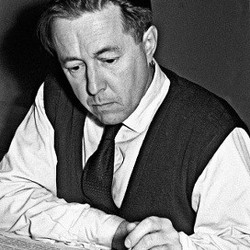
- Aleksandr Solzhenitsyn
- 11 December 1918 - 3 August 2008
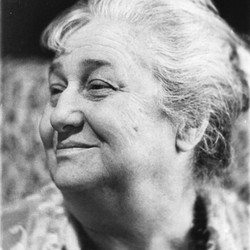
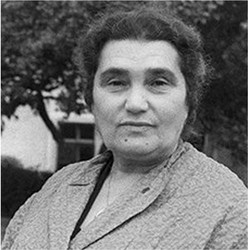
- Anna Akhmatova
- 23 June 1889 - 5 March 1966