Rosette C. Lamont. Review of Songs and Poems by Alexander Galich
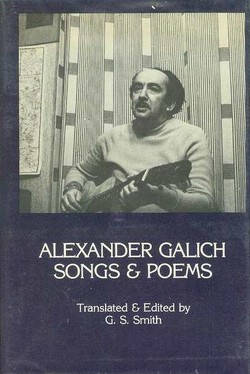
- Gerald Smith
-
Authors
- Review
-
Source Type
- Songs and Poems
-
Publications
- Autumn 1984
-
Date
- English
-
Language
World Literature Today 58:4 (Autumn, 1984), 627-628
The case of the poet Alexander Galich is an unusual one.
A successful playwright and screenwriter, a member of the Soviet intellectual and artistic elite, an esthete, a connoisseur, a bon vivant, he turned in the sixties into the boldest and most outspoken of underground bards. Leading a double life, Galich performed his songs/poems for friends at private parties of ten or fifteen people. In the meantime he went on with his official existence. However, the parties began to draw attention, to grow larger. Galich’s performances were recorded, and the tapes began to be circulated throughout the Soviet Union. Soon the bard became one of the leading stars of the magnitizdat (see WLT 53:2, pp 220-27). In 1972 he was expelled from the Writers Union, and in June 1974 he was ordered to leave the country in twenty-four hours. This he did with sorrow and foreboding, since he felt, like Solzhenitsyn, that his mission was to be a dissenting voice on the inside. On 15 December 1977 he died in Paris as a result of a freak accident (he was electrocuted in his apartment as he was plugging in a new tape recorder). Ironically, his final book of poems, published a week after his death, was entitled Kogda ia vernus’ (When I Return, see WLT 53:1 p. 135).
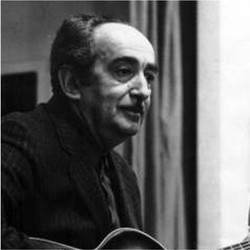
Galich’s songs are dramaticules, microcomedies and capsule tragedies. There is nothing diminutive, however, about their impact of message. They are vials containing bitter medicine (the Soviet bureaucracy calls it poison). Trained as an actor at the Stanislavsky Studio, the poet grew into a charismatic performer, delivering his poems to his own guitar accompaniment. His melodies are simple, but his delivery was compelling. It was with these compositions that Galich came at last into his own. Raisa Orlova, in her brilliant memoirs (1983) says that her friend Sasha must be considered a humorist in the tradition of Zoshchenko, a modern interpreter of that ancient oral genre, the skaz. G. S. Smith, in his introduction, states: “Galich’s songs are packed with references to Soviet institutions on all levels down to the most trivial details of everyday life. They are perhaps the most culture-specific works of art that have been produced in post-war Russia. But their themes eventually raise issues that transcend this culture.” Indeed, these songs capture the tone and texture of Soviet quotidian reality. In could be said that they are perfect examples of Soviet realism, but it is realism with a vengeance. As Orlova points out in her lovingly written chapter: “It was always heart-rending to listen to Galich, for his songs brought us to the realization that our world was divided into two groups of people: the henchmen and the victims. There was nothing in between.”
Unfortunately, as Smith himself admits, it is impossible to translate Galich. The explanation can be found in one of the charming anecdotes retold by Orlova. She speaks of one of Galich’s performances abroad, in Switzerland. His audience was made up of the new émigrés together with the old refugees from the days of the Revolution. One of the latter kept on listening to the bard with growing puzzlement. Finally she inquired of her neighbor: “In what language is he singing?” “In Soviet Russian” was the answer. Smith explained in an introductory note: “The decision to try and make the texts singable to the original tunes has necessitated isometric translation, and an attempt has also been made to retain where possible Galich’s rhyme schemes.” In some cases Smith remained close to the original (the cycle of the “Episodes from the Life of Klim Petrovich Kolomiitsev,” “Clouds,” “The Train”), but most of the time we feel that we are listening to Galich through cotton wool. It is this haziness which is so disturbing in the case of a poet who is known for his ironic clarity, for his deadly rapier thrust. Perhaps one ought to use this book as students use a pony. The non-Russian-speaking reader can listen to one of Galich’s records, follow the song in the translated version and perhaps get a little closer to the spirit of the text. Better still, add a third element: a Russian friend who can explain all the nuances. Songs and Poems would require many more notes than those which appear at the end here.
Rosette C. Lamont
Graduate Center, CUNY