Patricia Blake. “A Bargain with the Devil”
- Patricia Blake
-
Authors
- Review
-
Source Type
- The Master and Margarita
- The Master and Margarita
-
Publications
- 22 October 1967
-
Date
- English
-
Language
The New York Times (October 22, 1967)
“You could cover the whole world with asphalt,” remarked the late Ilya Ehrenburg, “but sooner or later green grass would break through.” In this fashion, the process of suppression of modern Russian literature, that began in late 1920’s and persists to this day, has yielded from time to time to these stubborn shoots. A few works, like some of Zamyatin, Pasternak and Tertz, have only made their appearance abroad, while others have broken past the controls that have been greatly eroded in the post-Stalin era.
There still exist, however, obstacles to the task of restoring to Russian culture the work of the countless writers silenced or executed in the 1930’s. Commissions charged with recovering the literary legacy of “post-humously rehabilitated” writers often find the police archives impenetrable, as in the case of Isaac Babel, whose unpublished manuscripts were seized at the time of his arrest in 1939. Yet, because of the devotion, persistence and courage of some Russian scholars and editors, a whole body of literature is, however slowly and fitfully, rising from oblivion.
The effect is hallucinating, like a first glimpse of Pompeii when the lava and the latter-day residents are cleared away: the lovers are revealed, enlaced, as the disaster found them, and works of art and graffiti alike are seen, still fresh upon the wall. Recently, these digs have uncovered a masterpiece: a novel by Mikhail Bulgakov that was unknown until its publication in the Soviet magazine Moskva in 1966-67. Had “The Master and Margarita” appeared when it was completed in 1938 it would surely have long been considered a classic of 20th-century fiction.
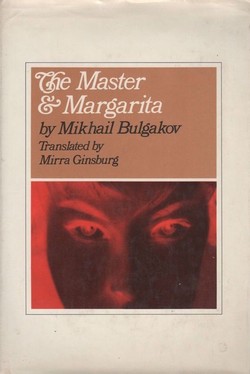
Now, after three decades of oblivion, two editions of “The Master and Margarita” have been published in America. But how unfortunate that of these two, only one has been translated (by Michael Glenny for Harper & Row) from the text as it was written by Bulgakov, which was obtained from unofficial sources in Russia. The other translation (by Mirra Ginsburg for Grove Press) was made from the expurgated text published in Russia last year. This is all the more destressing because both translations are excellent.
A comparison of the two versions of the novel offers a fascinating opportunity to look over the shoulder of the Soviet censor as he operates in Kosygin’s Russia. The 23,000-word cuts made in the Moskva version used by Grove Press are worthy of a study by themselves, as they reveal interesting areas of sensitivity. The sense of the novel has been lost by the omission of Christ’s “last word” on the cross. Two long, brilliantly comic passages have been excised, reducing the chapter in which they appear to a few paragraphs. One of these describes a nightmarish investigation of currency speculators. The other is an episode in which the devil’s helpers create chaos in a store where foreign goods are being sold for foreign money to some fishy Soviet characters.
The major categories of cuts have to do with sex, speculation, shortages of goods and the Stalinist terror. Evidently it is inconceivable in Soviet Russia of the 1930’s, or today, that anyone makes love, is naked, or even has an unbuttoned fly. References to arrests, police searchers, fear, spies, “denunciations for harboring illegal literature,” and other such features of the period have been expunged. In short the whole atmosphere of repression has been shaded out by the censor.
Ironically, we must be grateful to the Soviet Union for not adhering to the international copyright convention. Otherwise rights would scarcely be granted by the Soviet authorities to publish any version but the expurgated one. And 29 years was too long to wait for this novel; readers should not be satisfied with anything but the full text.
Bulgakov began writing the novel in 1929, the year Stalin assumed complete political control of the Soviet Union, and finished it nearly a decade later, at the height of the great purges that swept millions into prison and decimated the intelligentsia. During these years, when Russia was possessed by an irrational and unconquerable evil, Bulgakov turned to the great allegories of the past, as other writers have done to preserve sanity at times of historical catastrophe. His themes are Christ’s Passion, and the Faust legend transposed to Moscow of the 1930’s and adapted, with superb ingenuity, to the circumstances of the period.
Here Faust is seen as a Russian novelist of genius (“the master”) who is packed off to a lunatic asylum for having retold the Passion, according to apocrypha of his own devising. (Excerpts of his work are given to form a novel within a novel.) He makes his bargain with the devil – not for youth, or love or knowledge – but for freedom. And he breaks it – not for his immortal soul but for the redemption of Pontius Pilate in purgatory. The devil meanwhile has turned all the Moscow into a lunatic asylum: disembodied heads fly; clothing vanishes off ladies in the street; banknotes are transformed into champagne labels; and all the employers in an office, lead by a diabolic choirmaster, are unable to stop singing “The Song of the Volga Boatman” in chorus.
Obviously such a book may be understood as a satire of Stalin’ Russia, just as “Crime and Punishment” may also be read as a detective story. Yet the satanic humor of “The Master and Margarita” is made to serve philosophical intentions, allusively expressed and provocative in the extreme, that will henceforth surely be a subject for variant interpretations. Perhaps the most problematic notion is the moral ambiguity of the devil’s works that is first conveyed by Bulgakov’s epigraph from Goethe’s “Faust”:
“Who art thou then?”
“Part of that power which eternally wills evil and eternally works good.”
Certainly there is excruciating pleasure, even edification, in the spectacle of dreary bureaucrats, grasping housewives and obtuse policemen being stripped down to their essential meanness by the devil. Even more suggestive, however, is the nature of the master’s bargain with the devil. Although he exacts freedom from the devil, his spirit is broken by the world. Too weary now to fight for salvation for himself, he obtains it for Pontius Pilate, and settles at the last for the devil’s offer of limbo in a cozy cottage he can share with his love, Margarita, in eternity.
In spite of this ironic ending, Bulgakov’s novel clearly asserts that the creative will of the artist will prevail; the artist must confront and deal with the devil who may ultimately yield to forces stronger than he. Indeed, the whole thrust of the book is in one of the extraordinarily moving passages that describe the Crucifixion. Here Christ’s last words are reported to be “One of the greatest human sins is cowardice.” These are the words that torture and pursue Pilate into purgatory. And this is the notion that made Bulgakov so threatening to the basis of totalitarian authority in the 1930’s. How dangerous it remains today may be judged by the fact that all references to these crucial “last words” were censored out of the text of “Master and Margarita” as published last winter in Russia.
Here one must refer directly to the conditions under which this novel was written, and to the stand of Russian writers in the face of the intensifying terror. During the period of Stalin’s ascendancy, the majority of writers, deluded earlier about the nature of the revolution, were caught unaware by the fearful demands made upon them in the 1930’s. Under attack for a variety of “errors,” most submitted with scarcely a murmur, and were rewarded by being arrested during the great purges.
A few like Bulgakov, Zamyatin and Pasternak, refused to make any rationalizations of, or compromises with, the demoniac forces that possessed the nation – and it was they who survived. The fact that Bulgakov had the strength and the internal integrity to write “The Master and Margarita” under these conditions itself demonstrates the truth of his portrait of the artist as a redeeming figure.
Bulgakov, who was by profession a doctor, and the son of a professor of theology, was well educated in scientific and theological matters. His first collection of short stories, published in Russia under the title “Diavoliada” (Deviltry) in 1925, suggests an early fascination with diabolism of a contemporary sort. In the most famous of these stories, “The Fatal Eggs,” a shipment of reptile eggs, sent in error by a Government bureau to a Soviet state farm, hatch into giant anacondas and crocodiles. These multiply incessantly, threatening the whole country with appalling devastation. Many thousands die and whole armies are routed until an early frost destroys the monsters. Another story from this collection, “The Adventures of Chichikov,” has the scheming hero of “Dead Souls” return to Soviet Russia and find the same filth everywhere, and the same rascals up to their old tricks.
It was scarcely likely that such a writer would be accepted with much enthusiasm by the authorities after 1929, when literature began to be rigorously “bolshevized.” Bulgakov’s tremendously successful play, “The Days of the Turbins” (1926), based on his novel “The White Guard,” was withdrawn from the repertory of the Moscow Art Theater in 1929.Three other Bulgakov plays were banned in quick succession. The 1930 edition of the Soviet Literary Encyclopedia called him an unregenerate bourgeois writer, and Stalin himself criticized his play “Fight.”
In 1932 Bulgakov decided to try to follow the example of Zamyatin who had asked Stalin for, and received permission to emigrate. He wrote to Stalin telling him that he was being hounded by the police, that his apartment was frequently searched, and that he would commit suicide if he were not permitted to go abroad. Stalin phoned him, denying him permission to leave but saying that henceforth he would be left in peace and could go on with his work. Stalin then expressed the desire to see “The Days of the Turbins.” This created a frightful commotion at the Art Theater which had to produce the play again on four-days’ notice, simply to provide a private performance for Stalin. The play then went back into the repertory.
Several other plays by Bulgakov were later produced, but never again any on contemporary themes. One of these was a biographical play, “Molière,” and a dramatization of “Dead Souls,” which is still in the Art Theater repertory. But most of his writings were banned. Out of some 35 plays he wrote, only 11 are known to exist today, and of these six were actually produced in his lifetime. His encounters with censorship, and with terror-stricken directors of Soviet theaters, are described in his “Theatrical Novel,” which was published for the first time in Russia in 1966, and which will appear next spring in America. This is a superb satire of the Art Theater in which the figures of Stanislavsky and Nemirovich-Danchenko – old, demoralized and quarrelsome – are only faintly disguised.
During the late 1930’s Bulgakov never lost his sense of proportion. Although his work ceased to be performed or published during the great purges, Bulgakov continued to write and to entertain his friends with comic parodies of imagined encounters with Stalin. The novelist Konstantin Paustovsky tells in his memoirs about one of these fantasies. “Why do you look so ragged?” asks Stalin. Bulgakov replies that he can’t get work and that the theaters will not put on his plays. Stalin orders the party leaders standing nearby to take off their coats and hats and give them to Bulgakov. He then phones the Art Theater director to tell him to produce Bulgakov’s plays. “This is Stalin,” he says, “hello, hello….” There is a long pause, and then he is apparently disconnected. He calls back and reaches the deputy director. “What! The director is dead?” says Stalin, and turning to Bulgakov adds, “What do you think of that? I was just talking to the director and now they tell me he just dropped dead. How strange….”
Bulgakov spent the last year of his life in total blindness, dictating a still unpublished novel, “The Notes of a Dead Man,” to his wife. “One must continue working while one is still conscious,” he told her. His death of uremia in 1940 at the age of 49 was not reported in the Soviet press.