Merle Fainsod. One To Be Burned
- Merle Fainsod
-
Authors
- Review
-
Source Type
- The Deserted House
- Odin den' Ivana Denisovicha
-
Publications
- 12 November 1967
-
Date
- English
-
Language
The New York Times (November 12, 1967)
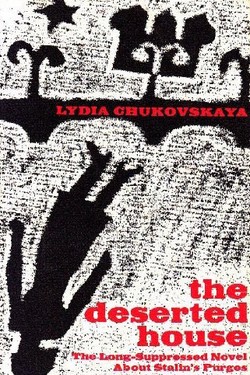
Addressing a meeting of the literary artistic intelligentsia in Moscow on March 8, 1963, Nikita Khrushchev exclaimed, “They say that the magazines and publishing houses are flooded with manuscripts about the life of persons in exile, in jails, in the camps. I repeat once more that this is a very dangerous theme and difficult material.” How dangerous and difficult this long-suppressed novel about Stalin’s purges by Lydia Chukovskaya makes strikingly manifest.
Lydia Chukovskaya, daughter of the eminent Soviet literary figure, Kornei Chukovsky, and a distinguished writer in her own right, wrote this tale “for the drawer” in the winter of 1939–40 while the memory of the Great Purge was still fresh. Encouraged by Khrushchev’s authorization of the publication of Alexander Solzhenitsyn’s One Day in the Life of Ivan Denisovich in 1962, she hoped to publish her story in Russia, but the party imposed a ban on what it called “one-sided interpretations of events and phenomena connected with the cult of the individual,” and as a result a Soviet edition of this novel has yet to appear. A copy was smuggled into Western Europe, to be published in Paris and London “without permission of the author.”
The Deserted House, unlike Ivan Denisovich, does not center on life in the concentration camps. Its concern is with conveying the atmosphere of spreading fear and numbing terror that engulfed Soviet society and the Great Purge gathered force in the later thirties. The central figure of the story, Olga Petrovna Lipatova, is a widow who helps support her engineering-student son by working as head of a typing pool in a state publishing house in Leningrad. One of the little people, understanding almost nothing about politics, her life revolves around her job, in which she finds fulfillment, and her pride in the accomplishments of her son Kolya, a dedicated young Communist who seems destined for a brilliant engineering career.
Her placid existence is suddenly shattered when news arrives of the arrest of Kolya in Sverdlovsk, where he has gone on an engineering assignment. Her faith in the justice of the regime still unimpaired and convinced that some terrible mistake has been made, she embarks on a nightmarish, Kafka-like round of endless waiting in queues to plead Kolya’s case before unfeeling officials, only to be finally told that Kolya has been condemned as a terrorist and sentenced to a camp for 10 years. Meanwhile, as the mother of “a repressed element,” she finds what is left of her world crumbling around her. Her neighbors treat her as a pariah. The purge reaches into her office, and the director, whom she admires, is arrested. Her best friend in the office is dismissed because of her social origins and commits suicide. She is herself denounced for rising to the defense of her friend and resigns in order to avoid dismissal.
Threatened with deportation and the loss of her apartment and distraught with grief and worry, she pretends to her neighbors that her son has been released from the camps and half believes it herself. When a letter finally arrives from her son pleading desperately that she intensify her efforts to obtain his release, she shows the letter to a friend and is advised that any further efforts on her part can only result in her own deportation and worse treatment of her son. Utterly demoralized, she burns her son’s letter.
After reading Chukovskaya’s novel, one can understand why it remains unpublished in the Soviet Union. It is strong medicine. There is nothing in it to “fill the hearts of Soviet people with pride in their country”; what it documents is the utter senselessness of the purges. From the point of view of the regime Solzhenitsyn’s Ivan Denisovich had one saving grace; its hero at least preserved his pride in craftsmanship and construction, despite the horrors and cruelties of camp life. The Deserted House provides no comparable affirmation; the picture of officialdom is an unrelieved black; the dominant mood is sauve qui peut, and it is left to a few ordinary citizens to display traces of compassion and kindness under stress.
The Deserted House promises to take its place with Ivan Denisovich as one of the most impressive examples of the genre of Russian “purge literature.” Both novels have a ring of unimpeachable authenticity. They achieve their power through their integrity, their stark simplicity, and their restraint. They implicitly raise questions of responsibility for the senseless slaughter of the purges which have still to be satisfactorily resolved. Indeed, these questions will go on plaguing the regime as long as it continues to feel that the theme of the purges is too “dangerous” and “difficult” to be openly faced.
Addressing a meeting of the literary artistic intelligentsia in Moscow on March 8, 1963, Nikita Khrushchev exclaimed, “They say that the magazines and publishing houses are flooded with manuscripts about the life of persons in exile, in jails, in the camps. I repeat once more that this is a very dangerous theme and difficult material.” How dangerous and difficult this long-suppressed novel about Stalin’s purges by Lydia Chukovskaya makes strikingly manifest.
Lydia Chukovskaya, daughter of the eminent Soviet literary figure, Kornei Chukovsky, and a distinguished writer in her own right, wrote this tale “for the drawer” in the winter of 1939–40 while the memory of the Great Purge was still fresh. Encouraged by Khrushchev’s authorization of the publication of Alexander Solzhenitsyn’s One Day in the Life of Ivan Denisovich in 1962, she hoped to publish her story in Russia, but the party imposed a ban on what it called “one-sided interpretations of events and phenomena connected with the cult of the individual,” and as a result a Soviet edition of this novel has yet to appear. A copy was smuggled into Western Europe, to be published in Paris and London “without permission of the author.”
The Deserted House, unlike Ivan Denisovich, does not center on life in the concentration camps. Its concern is with conveying the atmosphere of spreading fear and numbing terror that engulfed Soviet society and the Great Purge gathered force in the later thirties. The central figure of the story, Olga Petrovna Lipatova, is a widow who helps support her engineering-student son by working as head of a typing pool in a state publishing house in Leningrad. One of the little people, understanding almost nothing about politics, her life revolves around her job, in which she finds fulfillment, and her pride in the accomplishments of her son Kolya, a dedicated young Communist who seems destined for a brilliant engineering career.
Her placid existence is suddenly shattered when news arrives of the arrest of Kolya in Sverdlovsk, where he has gone on an engineering assignment. Her faith in the justice of the regime still unimpaired and convinced that some terrible mistake has been made, she embarks on a nightmarish, Kafka-like round of endless waiting in queues to plead Kolya’s case before unfeeling officials, only to be finally told that Kolya has been condemned as a terrorist and sentenced to a camp for 10 years. Meanwhile, as the mother of “a repressed element,” she finds what is left of her world crumbling around her. Her neighbors treat her as a pariah. The purge reaches into her office, and the director, whom she admires, is arrested. Her best friend in the office is dismissed because of her social origins and commits suicide. She is herself denounced for rising to the defense of her friend and resigns in order to avoid dismissal.
Threatened with deportation and the loss of her apartment and distraught with grief and worry, she pretends to her neighbors that her son has been released from the camps and half believes it herself. When a letter finally arrives from her son pleading desperately that she intensify her efforts to obtain his release, she shows the letter to a friend and is advised that any further efforts on her part can only result in her own deportation and worse treatment of her son. Utterly demoralized, she burns her son’s letter.
After reading Chukovskaya’s novel, one can understand why it remains unpublished in the Soviet Union. It is strong medicine. There is nothing in it to “fill the hearts of Soviet people with pride in their country”; what it documents is the utter senselessness of the purges. From the point of view of the regime Solzhenitsyn’s Ivan Denisovich had one saving grace; its hero at least preserved his pride in craftsmanship and construction, despite the horrors and cruelties of camp life. The Deserted House provides no comparable affirmation; the picture of officialdom is an unrelieved black; the dominant mood is sauve qui peut, and it is left to a few ordinary citizens to display traces of compassion and kindness under stress.
The Deserted House promises to take its place with Ivan Denisovich as one of the most impressive examples of the genre of Russian “purge literature.” Both novels have a ring of unimpeachable authenticity. They achieve their power through their integrity, their stark simplicity, and their restraint. They implicitly raise questions of responsibility for the senseless slaughter of the purges which have still to be satisfactorily resolved. Indeed, these questions will go on plaguing the regime as long as it continues to feel that the theme of the purges is too “dangerous” and “difficult” to be openly faced.