Julian Graffy. Review of Songs and Poems by Alexander Galich
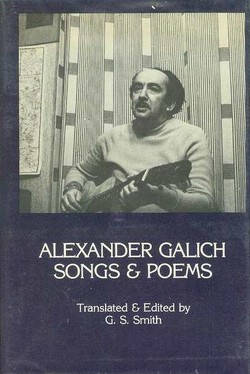
The Slavonic and East European Review 63:3 (July, 1985), 447-448
Fifty of Galich’s most famous songs and poems are collected here in translations by G.S. Smith. Though he writes in his introduction about the qualities that make them untranslatable, their ‘culture-specificity,’ their wordplay, their inalienability from Galich’s own voice and guitar, the versions provided here are as inventive and resourceful as we would expect from the man most anglophone Slavists would suggest as best qualified to make them. Those deprived of access to Galich’s voice and language will at least learn something of why he is so loved and admired.
This volume is even more valuable to scholars, however, for Dr. Smith’s excellent introduction. Not only is this the fullest survey yet of Galich’s life and career, drawing upon a wide variety of often little-known sources, but it is a major contribution to our understanding of the Soviet, and post-Soviet, literary process. This new story of ‘the making and unmaking of a Soviet writer’ reads with the drama of a novel. The naive enthusiasm of the teenage poet-actor in the 1930s, blind to the horror all around, the self-blinding post-war period of immense success as an official playwright and script-writer, the move from about 1960, motivated by conscience, anguish and ‘a powerful dose of self-contempt’ (p. 50), into writing the coruscating songs for which he is famous, the exile in 1974, even the loss of satirical bite in his exile writings, all these events are familiar to us in other careers, and in this sense Galich is a prototypical ex-Soviet writer. He himself saw as a key point in this journey the audience’s response to his reading Pamyati B. L. Pasternaka at the Festival’ bardov in Akademgorodok in 1968 (a concert at which, as Vadim Delone later recalled, the door of the club was draped with a banner announcing ‘Poety! Vas zhdyot Sibir’!’). But, and this is a point Dr. Smith makes tellingly, Galich is also unique; unique among the bards, in remaining, unlike Okudzhava and Vysotsky, completely underground, completely unacceptable to Soviet orthodoxy, and unique among established writers who emigrated in that all his officially published Soviet writings are completely without literary merit. He was, or seemed to be, a successful molchun. ‘Skol’ko raz my molchali po-raznomu/ No ne protiv, konechno, a za!’ (Staratel'skiy val'sok). It is this that made his renunciatory espousal of dissidence so courageous and so surprising to his erstwhile colleagues (‘On nash. On odin iz nas.’). Ironically, however, as Dr. Smith points out, the best work was written in the 1960s precisely because of the tension between art and bad conscience. ‘His wrestling with his conscience bore creative fruit; and when the conscience found peace, the fruit dried up’ (p. 51).
The picture of the true believers, or fake true believers of Soviet literature and their path to dissent has been much clarified in recent years, notably by certain publications in Pamyat’ and by Grigory Svirsky’s Na lobnom meste (London, 1979). The complexity and continuing controversiality of this process is exemplified by the reception of the recently published book-length memoirs of a close friend of Galich, Raisa Orlova, whose 1980 memoir of him is much quoted by Dr. Smith. Her Vospominaniya o neproshedshem vremeni (Ann Arbor, 1983) which includes an earlier consideration of Galich, on pp. 269-93, is instructive both for the prism it now provides on earlier events and for the angry accusation of continuing blindness it has provoked (see Kontinent, 40, Paris, 1984, pp. 401-09). In this contentious and painful area, the sober, unillusioned words of Dr. Smith are particularly admirable.
London
JULIAN GRAFFY

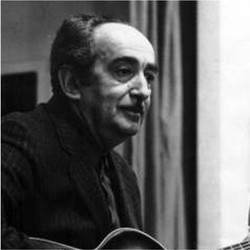
- Aleksandr Galich
- 19 October 1918 - 15 December 1977